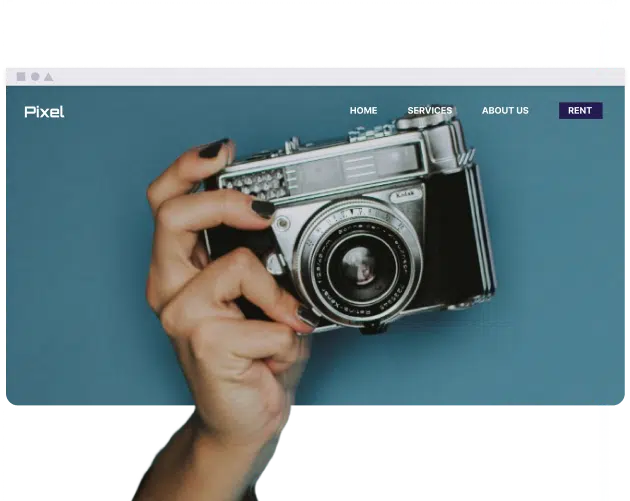








What should be included in a Photographer’s Website?
Your site can present a gallery of your work, an “About Me” section, a list of services, contact information, and client reviews. All these elements aim to encourage casual browsers to become paying customers. One needs these elements, as they fundamentally answer the primary questions of a visitor: Is the work excellent? Who is the creator? How can I hire them?
What is a Photography Portfolio?
A photography portfolio is a collection of images that represent the photographer’s skills and artistic approach. The presented visuals may shape prospective clients’ expectations about the outcome of hiring you for their project. The practice of showcasing only the highest-rated pieces can influence perceptions of consistency and quality, potentially correlating with trust development.
How can photographers protect their images from being stolen online?
Watermarks, disabling “right-click” saving, and using low-resolution images represent some protective measures employed by photographers. The methods described introduce technical or visual elements that can impede unauthorized use for the average user.
Consider Copyright Office registration for the essential images that you own; this legal procedure is sometimes a prerequisite in case you want to sue for statutory damages related to image theft.
What are the different types of Photography Websites?
The four main types are portfolio sites for showcasing work, client galleries for private image delivery, e-commerce sites for selling prints, and educational blogs for sharing photography tips. Most photographers use a “hybrid” model that combines a portfolio with a blog or a client delivery system.
How to create a Photography Website?
Firstly, you pick the platform (the website builder), after that, a visual template, then the best of your images, and lastly, connect a custom domain name. The availability of modern tools, such as “drag-and-drop” editors, can influence the extent to which coding knowledge is required for creating a professional website. This approach may be associated with cost adjustments and enables user-managed updates, influencing the need for web developer involvement in standard processes such as image uploads.
On which website builders can I make a Photographer’s Website?
Hocoos AI and Wix are frequently used options for general applications, while Pixpa, Zenfolio, and Format are (mainly) utilized by artists. These builders provide high-resolution image hosting and print shop integrations, features that photographers may or may not find pertinent. Specialized builders offer integrated “client proofing” tools, which could affect subscription costs.
How do people find a Photographer’s Website through SEO?
Website visibility can be affected by Search Engine Optimization (SEO) practices. For example, they will write in a search engine: “portrait photographer in *City*.” You need to add the exact keywords in your text (if you want to appear at the top). Also, make sure to upload your pictures with “Alt Text” (hidden descriptions) so that Google will get what you are showing.
How much does a Photography Website cost?
A pro photographer website can be set up by paying $150 to $500 per year for hosting and a domain, or you can also work with a professional designer who will do a custom build for you at a higher price, around $2,500. For most beginners, a standard monthly subscription to a builder like Wix or Hocoos AI is the most sustainable option. The absence of ads and the availability of custom domains are factors associated with paid plans, which may be limited in free versions.
Conclusion
A photography business may utilize a professional website as a gallery and for some office functions. Investing in a premium digital presence may affect the perceived authority of your artistic vision.